
As an Amazon Associate, I earn from qualifying purchases.
You didn’t just buy an electric bike; you bought a high-tech power station on wheels. But there’s a problem: thieves have realized that snatching a 7lb battery is much easier and more profitable than trying to saw through a heavy U-lock on a 75lb cargo bike frame.
I’m SafeRide Steve, and today we’re diving into why your factory lock isn’t enough, how to handle the ebike battery key crisis, and how to build a secondary line of defense around your thousand-dollar investment.
Why Battery Theft is Skyrocketing
The math is simple for criminals:
- Resale Value: Used Bosch, Shimano, or Yamaha batteries are virtually untraceable and sell instantly on the second-hand market for $400–$600.
- Vulnerability: Many stock e bike key lock systems are simple “wafer” cylinders that can be bypassed with a heavy-duty screwdriver or a pry bar in seconds.
1. Understanding Your Stock Battery Lock
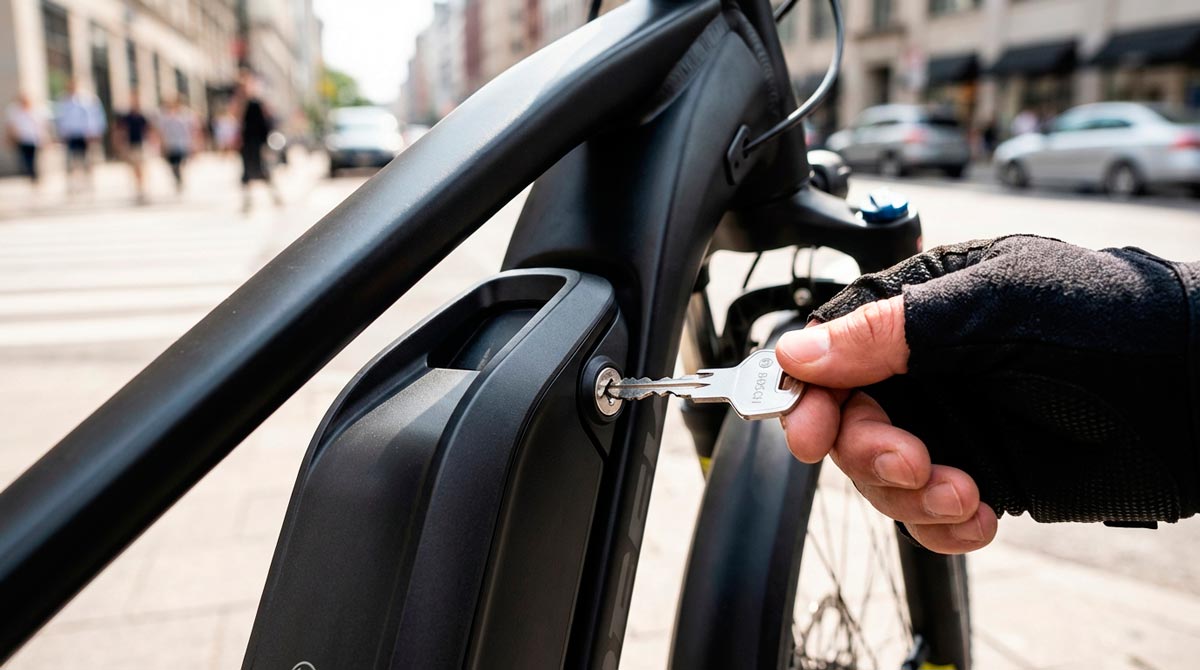
Most quality e-bikes come equipped with locks from brands like Abus, AXA, or Trelock.
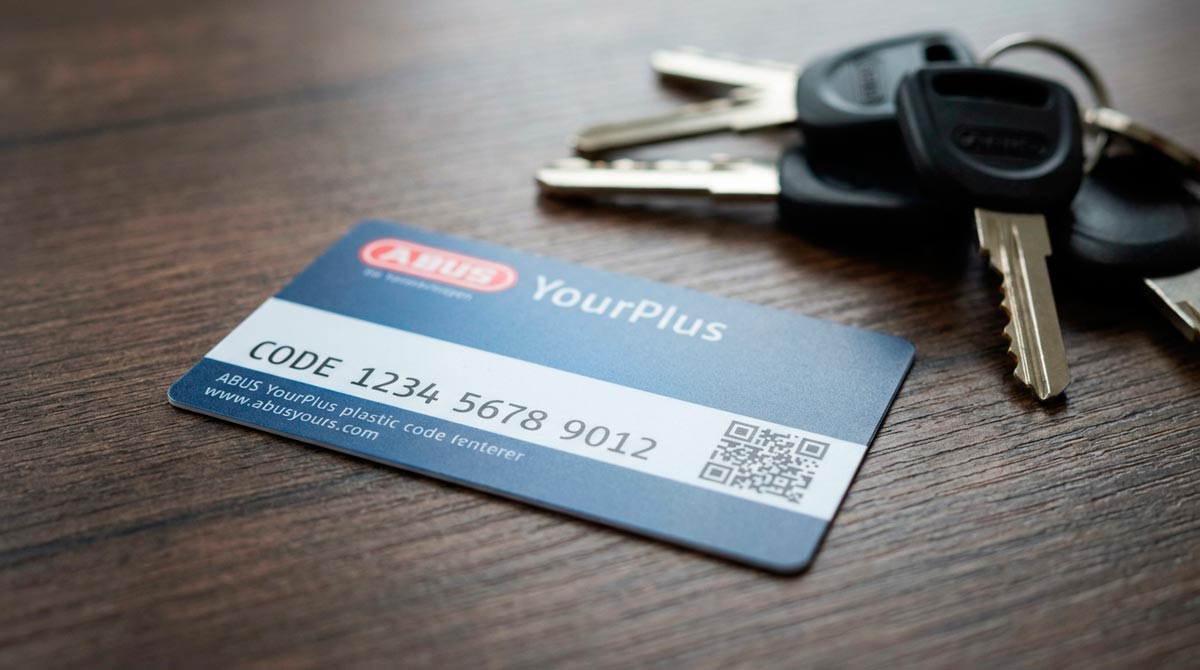
- Bosch Systems: Usually feature Abus cylinders. If your bike has a bosch ebike battery lock, you should have received a Key Code Card. This is your “passport” for ordering replacements.
- The Downside: These locks are designed for convenience, not high-level security. They prevent “grab-and-go” theft but won’t stop a determined thief with a pry bar.
2. Lost Your Ebike Battery Key? Here’s the Fix
This is one of the most searched issues: ebike battery key. If you lose your keys, don’t reach for the drill just yet.
- Locate the Code: Check your manual or the metal tag that came with your keys. It’s a 4 to 6-digit code.
- Order by Code: You can officially order a replacement key via specialized locksmiths or directly from the manufacturer using this code.
- No Code? You’ll likely need to replace the entire cylinder. This is a 20-minute DIY job, but you’ll need to access the mounting hardware inside the frame or motor housing.
3. Steve’s “Secondary Defense” Strategy
To truly protect your wallet, you need to make the thief’s job miserable. My tactic is Layered Security.
The “Friction” Method
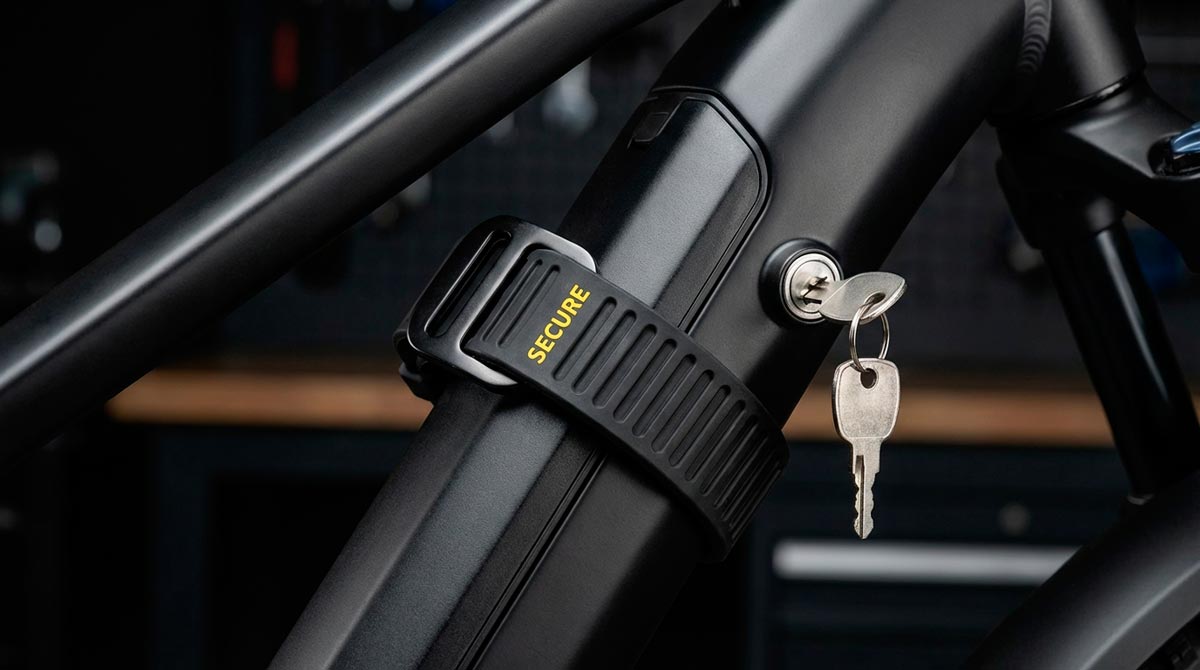
Even if the main lock is picked, the battery shouldn’t just drop into the thief’s hands. Use a heavy-duty, reusable strap or a specialized security tie over the battery housing.
- Why? It adds an extra step. A thief wants a 5-second job. Removing a secondary strap or cable takes time and makes them look suspicious.
4. Management & Winter Safety
Electric bike security is as much about habits as it is about hardware.
- The “Take it with You” Rule: If you’re parking in a high-risk area for more than an hour, take the battery with you. A bike without a battery is a much harder “sell” for a thief.
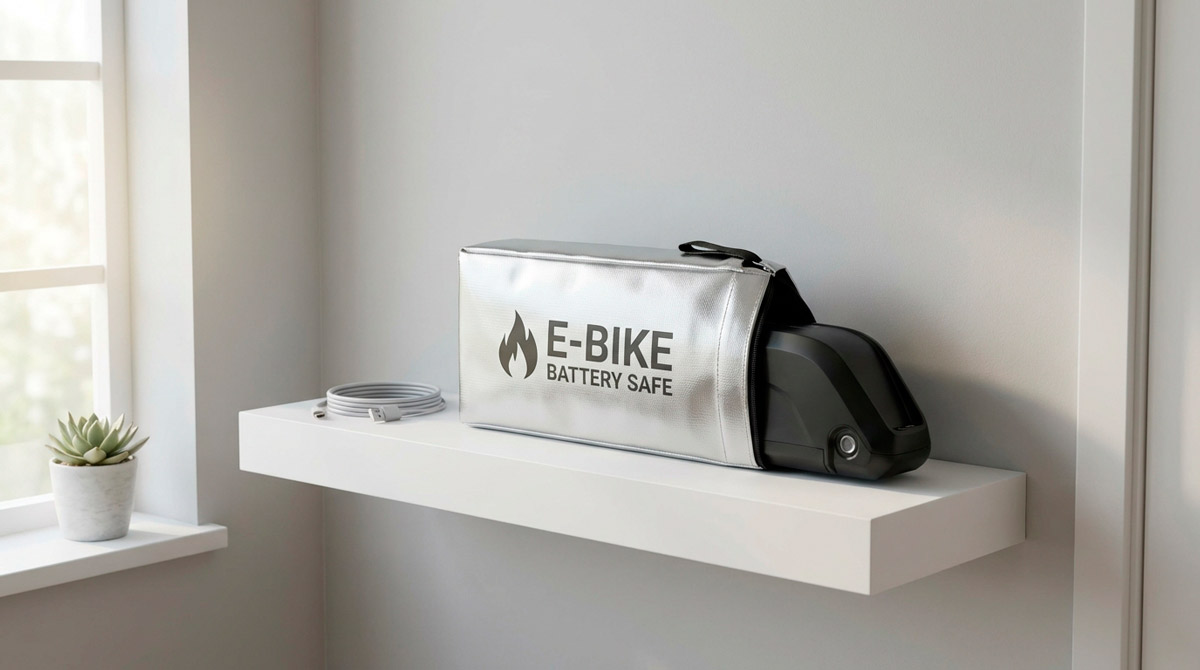
- E-Bike Battery Winter Storage: Cold weather saps capacity. During winter, store your battery indoors in a Fireproof LiPo Bag.
Frequently Asked Questions (FAQ)
Can I upgrade my battery lock?
Yes, Abus offers higher-security cylinders that can often be retrofitted to Bosch and Shimano systems.
Does e-bike insurance cover the battery?
Usually, yes—but only if the battery was locked. Check if your policy requires a Sold Secure Diamond rating.
Final Verdict
Your battery is the heart of your bike. Treat it like a $1,000 bill taped to your frame. Use the factory lock, add a secondary strap, and whenever possible, just take it with you.