As an Amazon Associate, I earn from qualifying purchases. This helps keep my testing independent and the site running at no extra cost to you.
Did you know that an electric bike is stolen every few minutes in major urban areas? For a thief, your e-bike isn’t just a vehicle; it’s a high-value, easy-to-flip asset worth thousands of dollars. If you are still using a standard cable lock or a budget U-lock from 10 years ago, your bike is effectively a gift to anyone with a $30 cordless angle grinder.
I’m SafeRide Steve, and I’ve spent years testing how to stop professional bike thieves. The reality of 2026 is simple: you cannot rely on a single lock anymore. You need a Multi-Layered Defense Strategy.
In this ultimate guide, I will walk you through the exact steps to make your e-bike “theft-proof,” from picking the best e-bike locks to setting up GPS tracking and finding the right insurance coverage.
Table of Contents
The Multi-Layered Defense Strategy
To truly protect your electric bike in 2026, you need to change your mindset. Modern thieves use high-speed power tools, but they are always looking for the easiest target. If you only use one lock, you are making their job simple. My strategy is based on three essential layers:
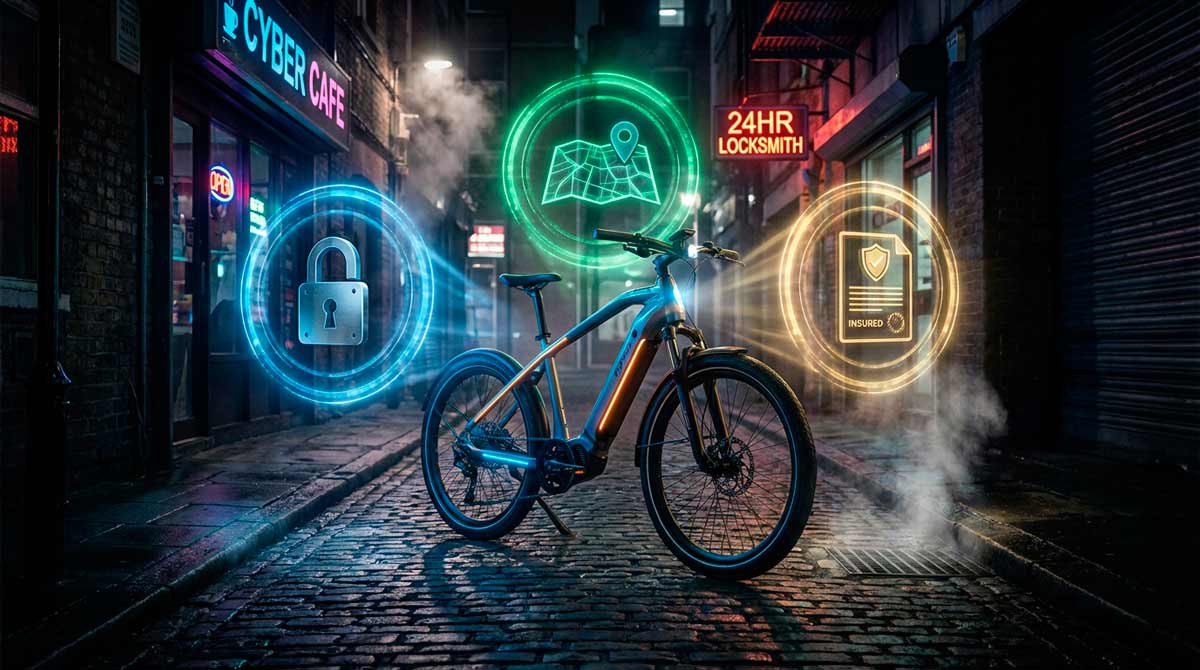
Physical Barriers (Best Ebike Locks)
Your first line of defense is always a physical one. However, for a high-value electric bicycle, a standard cable or thin D-lock isn’t enough to stop a professional thief. To truly protect your investment, you should only settle for Sold Secure Diamond rated protection. These locks are engineered to withstand aggressive attacks, including the latest cordless power tools.
Electronic Deterrents (Alarms & GPS)
If a thief manages to bypass your primary lock, electronic layers take over. A motion-sensitive alarm acts as a psychological deterrent, often scaring the thief away before they can finish the cut. If the bike is moved, hidden GPS trackers and alarms become your only hope for recovery, providing real-time location data. For many riders, learning how to hide an AirTag on an e-bike is the most cost-effective way to add this vital tracking layer.
Financial Protection (E-bike Insurance)
Even with the best locks and trackers, professional thieves can be persistent. This is where insurance becomes your ultimate safety net. A dedicated policy ensures that if your bike is stolen or damaged, you aren’t left out of pocket by thousands of dollars. Unlike standard homeowners’ policies, specialized e-bike insurance is designed specifically for the unique risks of electric mobility.
Choosing the Best Ebike Lock for Maximum Security
When searching for the best ebike lock, you need to understand that electric bicycles require a higher standard of protection than traditional bikes. Because of their weight and value, thieves often target them with heavy-duty tools. A standard electric bicycle lock might look strong, but only a few can withstand a sustained attack from a cordless angle grinder.
Anti-Angle Grinder Locks: The New Gold Standard
The game has changed with the introduction of specialized materials like Graphene and Barronium. If you park in a high-risk urban area, a sold secure diamond bike lock is no longer optional—it is a necessity. These locks are designed to destroy multiple grinder discs, buying you the time needed to deter a thief.
For a deeper dive into the top contenders, read my full Hiplok D1000 vs. Litelok X3 comparison.
Comparison Hub: Top 3 Picks for 2026
When choosing a lock, you need to balance three conflicting factors: weight, convenience, and absolute security. A lock that is too heavy might be left at home, while one that is too light won’t stop a determined thief. In my testing, I look for models that offer a high “protection-to-weight” ratio, specifically focusing on those that have earned the Sold Secure Diamond certification—the highest industry standard for bicycle safety.
Below is a quick-reference table to help you find the right balance between portability and maximum resistance for your specific riding needs.
| Lock Model | Security Rating | Weight | Best For |
| Litelok X3 | Sold Secure Diamond | 2.1 kg | Maximum Security & Larger Frames |
| Hiplok D1000 | Sold Secure Diamond | 1.8 kg | Portability & Daily Commuting |
| Abus SmartX 770A | Sold Secure Diamond | 2.0 kg | Keyless Convenience & Smart Alarm |
Why these models made the cut
Selecting any of the locks above will put you ahead of 90% of other riders in terms of security. While the Litelok X3 and Hiplok D1000 focus on pure material strength against power tools, the Abus SmartX offers a different layer of defense with its integrated 100dB alarm.
However, remember that a thief who can’t take the whole bike might still try to strip it for parts. Protecting the frame is only half the battle; you also need to secure the most expensive component of your ride—the power source.
Component and Battery Security
A common mistake is thinking that because the frame is locked to a pole, the rest of the bike is safe. Professional thieves often target high-value components that can be removed in seconds. In 2026, the two most stolen parts are the battery and the wheels.
Securing Your E-Bike Battery
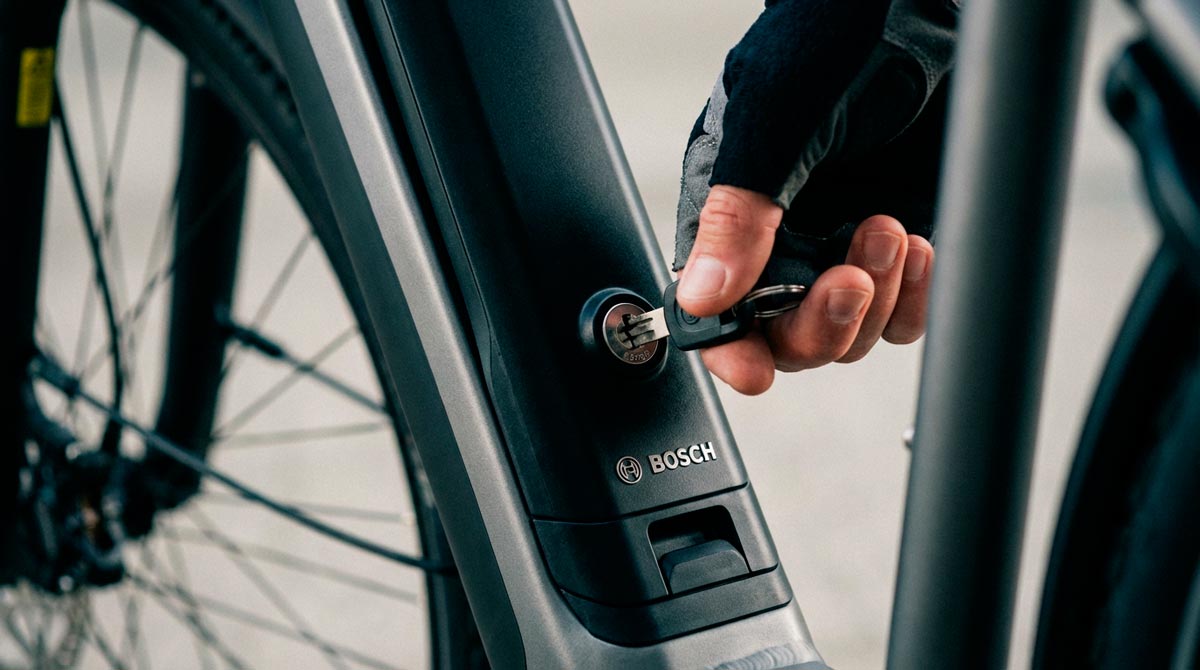
Your battery is the heart of your ride. Most e-bikes come with a built-in frame lock, but these are often thin and easily picked or pried open. If you use a high-end system, finding a dedicated ebike battery lock is a smart move. For instance, if your bike is powered by Bosch, upgrading to a specialized Bosch e bike battery lock from a brand like Abus can significantly increase resistance to tampering.
I always recommend taking the battery with you if you are parking in a high-risk area for more than an hour. It doesn’t just prevent theft; it also protects the cells from extreme temperatures, as I explain in my Battery Winter Storage Guide.
Quick Release vs. Locking Skewers
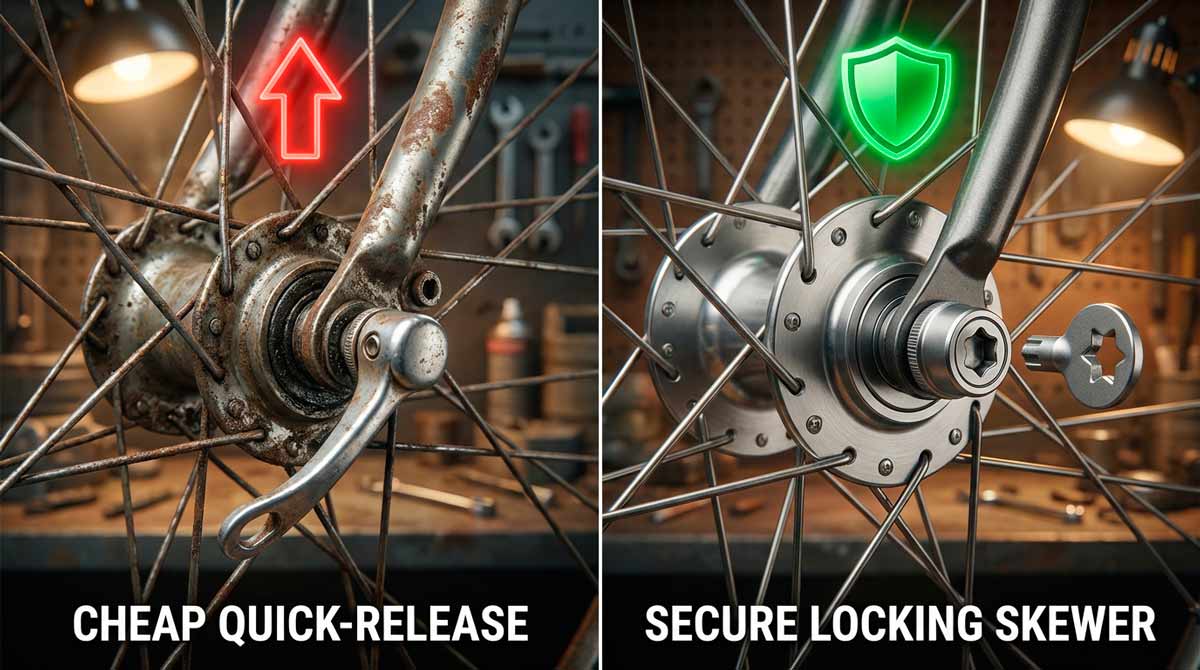
Standard quick-release levers on your wheels and seat post are a thief’s best friend. They can strip your bike in under 60 seconds without a single tool. Replacing them with locking skewers or hex-bolt alternatives is one of the cheapest and most effective upgrades you can make to your overall security setup. By removing the “convenience” of quick-release, you force a thief to carry more tools, which often makes them choose an easier target.
GPS Tracking and Recovery
If a professional thief manages to defeat your physical locks, your only chance of recovery is a hidden tracking system. In 2026, GPS technology has become smaller, cheaper, and more reliable. However, there is a big difference between a simple Bluetooth tag and a dedicated GPS tracker.
Apple AirTags: Cheap but Effective?
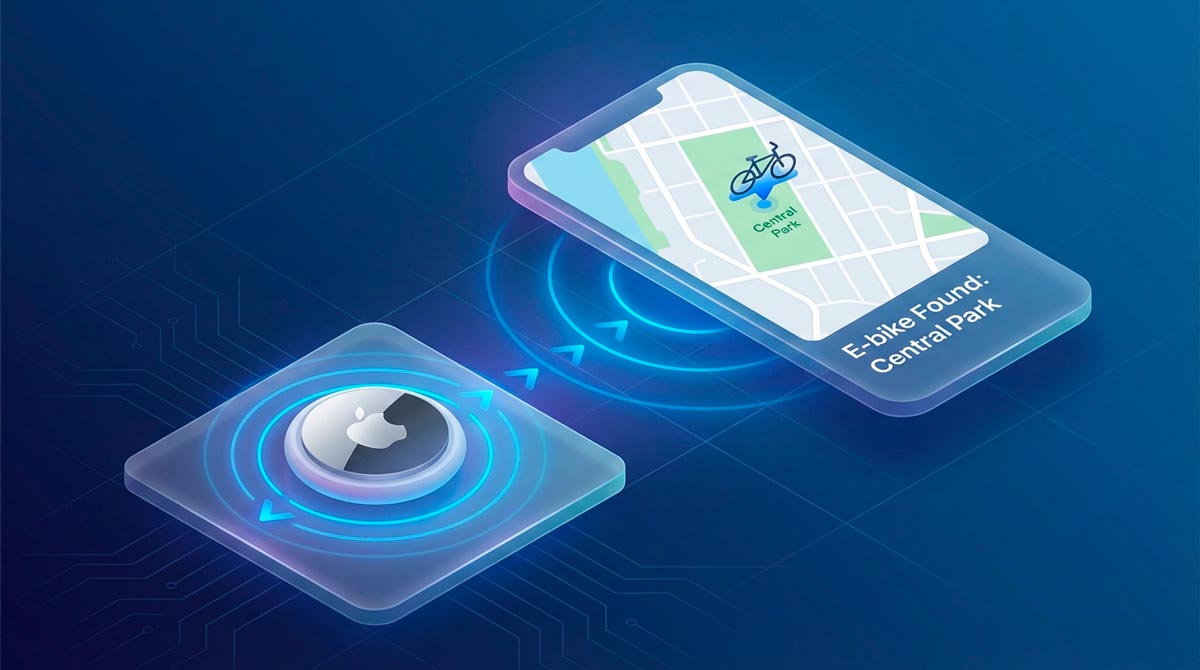
For many riders, hiding an AirTag on an e-bike is the first line of digital defense. As shown in the infographic above, these affordable tags use the massive Apple “Find My” network to send location data directly to your iPhone, allowing you to pinpoint your bike on a map.
- The Pro Tip: Don’t just tape it under the seat. Thieves check there first. Use a specialized reflector mount or hide it inside the motor housing.
- The Limitation: Remember that AirTags are designed to prevent stalking, so they will eventually alert a thief with an iPhone that a tracker is following them.
Dedicated GPS Trackers vs. Bluetooth Tags
If your bike is worth more than $3000, you should consider a dedicated e bike alarm system with real-time GPS. Unlike AirTags, these systems have their own SIM cards and GPS chips, providing:
- Real-time movement alerts sent directly to your phone.
- Live tracking that works even if no iPhones are nearby.
- Integrated 100dB alarms that trigger the moment the bike is bumped.
For a complete breakdown of the best tech, see my guide to e-bike alarm systems and GPS trackers.
Smart Parking Habits: Where and How
Even the world’s strongest lock won’t help if you park your bike in a dark, secluded alley where a thief has all night to work. Where and how you park is just as important as the gear you use. To maximize your electric bike security, you need to be strategic about every stop.
The “Goldilocks” Parking Spot
Finding the perfect spot is about balance. You want somewhere with enough foot traffic to deter a thief, but not so much that a thief can “blend in” with the crowd while working on your lock.
- Public Visibility: Always aim for areas covered by CCTV or near shop entrances. Thieves hate witnesses and cameras.
- Solid Anchors: Never lock to wooden fences, thin signposts, or “closed-loop” bike racks that can be lifted off the ground. If you can kick it or lift it, it’s not an anchor.
- Avoid “Routine” Parking: If you commute, try to vary your parking spot slightly each day. Professional thieves watch for patterns and “scout” high-value targets.
Security Challenges for Different E-bike Styles
Not all e-bikes are secured the same way. Depending on your frame geometry, you may need different locking strategies to ensure maximum protection:
- Fat Tire Electric Bikes: Due to the massive tire width, standard small U-locks often won’t fit. You’ll need a large-format sold secure diamond bike lock or a heavy-duty 12mm+ chain.
- Folding Electric Bikes: These are a high-risk target because they can be folded and thrown into a trunk in seconds. Steve’s Rule: Always lock through the main hinge point or the frame’s folding mechanism to disable the “folding” advantage for a thief.
- Electric Cargo Bikes: Their sheer length often makes standard racks inaccessible. Carrying a long, high-security chain is essential for these “utility” models to reach solid anchors.
- Step-Through Ebikes: Without a top tube, finding a secure locking point can be tricky. Always use the “rear triangle” or the area near the motor mount for maximum security.
The Best Way to Lock Your E-bike (Step-by-Step)
Many riders lose their bikes because of poor technique, not poor locks. To master the proper ebike locking technique, follow the “SafeRide Steve” protocol:
- Low and Tight: Keep your lock off the ground. A lock resting on the pavement is a “sitting duck” for a hammer attack or long-handled bolt croppers that use the ground for leverage.
- Capture the Frame: Never lock just the front wheel; it takes 10 seconds for a thief with a hex key to leave you with nothing but a wheel. Always go through the main frame triangle.
- The Rear Wheel Bonus: If your lock is long enough, loop it through the rear wheel rim AND the frame. This secures the expensive hub motor and ensures the thief can’t just take the frame and leave the wheels behind.
- Keyhole Placement: Always point your lock’s keyhole downward. This prevents rain and grit from entering the mechanism and makes it much harder for a thief to use picking tools or liquid nitrogen.
For a deeper dive into urban survival, check out my article on locking up an ebike in high-risk areas.
E-Bike Insurance: Is It Worth It?
Even with the best locks and smartest parking habits, professional thieves can be persistent. This is where ebike insurance becomes your ultimate safety net. While many riders assume their homeowners’ or renters’ insurance covers their bike, most standard policies have low limits for “motorized vehicles” or don’t cover theft if it happens away from your property.
Why Dedicated E-bike Insurance is Different
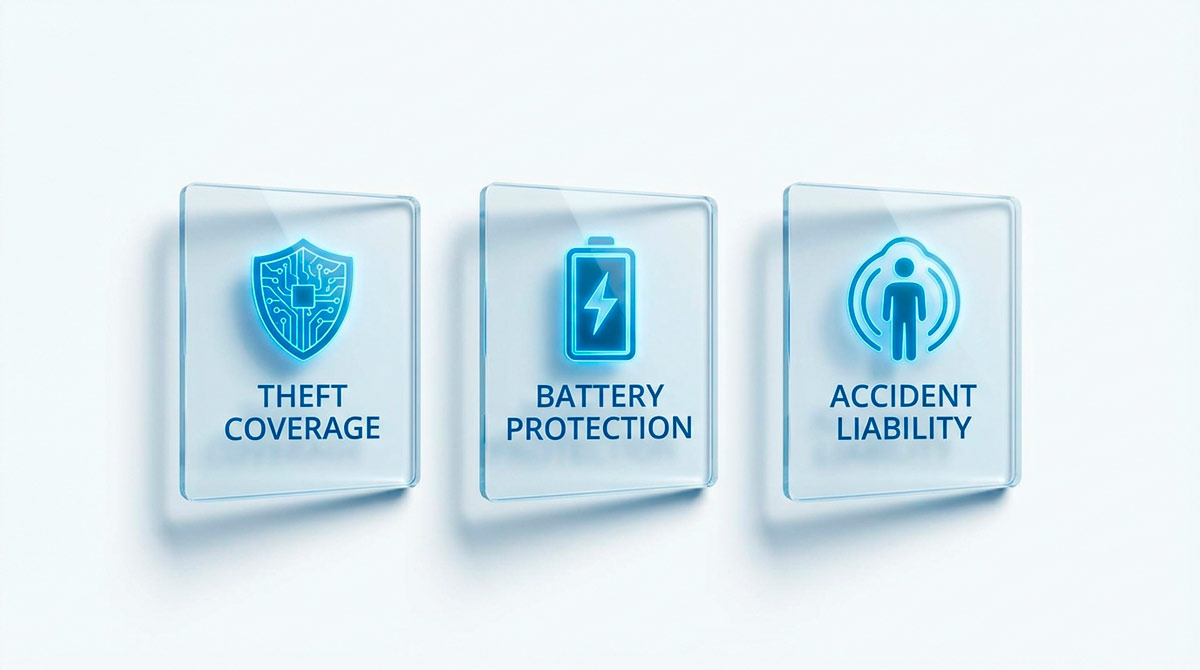
A specialized policy is designed for the high value of electric bicycles. In 2026, the best providers offer:
- Full Replacement Value: If your bike is stolen, you get enough to buy the same model new, not just its depreciated “used” value.
- Component Coverage: Most policies now include the battery and accessories, which we identified earlier as high-risk targets.
- Liability Protection: If you are involved in an accident with a pedestrian or vehicle, the insurance covers legal and medical costs—something a standard lock simply cannot do.
The “Lock Requirement” Clause
Crucial Advice from Steve: Almost every insurance provider will only pay out a claim if you were using a specific grade of lock at the time of the theft. Most policies require at least a Sold Secure Silver or Gold rated lock, and for bikes over $3,000, many now mandate a Diamond rated lock.
Pro Tip: Always keep the digital or paper receipt for your lock. Without proof that you owned a lock of the required security level, your claim will likely be denied.
For a full comparison of costs and top-rated companies, see my guide to the best e-bike insurance providers in 2026.
Frequently Asked Questions (FAQ)
Can I use a standard cable lock for my e-bike?
Only as a secondary lock for accessories (like your helmet). Never use a cable lock as your primary security, as they can be cut in seconds with simple hand tools.
Where is the best place to hide a GPS tracker?
The most secure locations are inside the motor housing or integrated within the bike’s frame. Avoid visible spots like under the saddle, as thieves check there first.
Does my homeowners’ insurance cover e-bike theft?
Usually, no. Most standard policies exclude “motorized vehicles” or have a very low payout limit (e.g., $500), which won’t cover a high-end e-bike. Always check your specific policy or get dedicated e-bike insurance.
Is it worth buying two different types of locks?
Yes! Using two different locking mechanisms (e.g., a U-lock and a heavy chain) forces a thief to carry two different types of tools, which often makes them choose an easier target instead.
Conclusion: Staying One Step Ahead
In 2026, bike theft is an arms race. While no system is 100% “theft-proof,” your goal is to make your bike the most difficult and time-consuming target on the street. By combining a Sold Secure Diamond lock, smart parking habits, and a hidden GPS tracker, you decrease the odds of theft by over 90%.
Don’t wait until your bike is gone to think about security. Invest in quality gear today, and enjoy the peace of mind that comes with knowing your ride is safe.
Steve’s Final Advice: If you’re not sure which model to pick, start by looking only at Diamond-rated locks. They are the only ones I trust with a high-end e-bike in 2026.
Browse Top-Rated Diamond E-Bike Locks on Amazon
Stay safe out there, SafeRide Steve